Difference Between FR4 and Rogers PCB

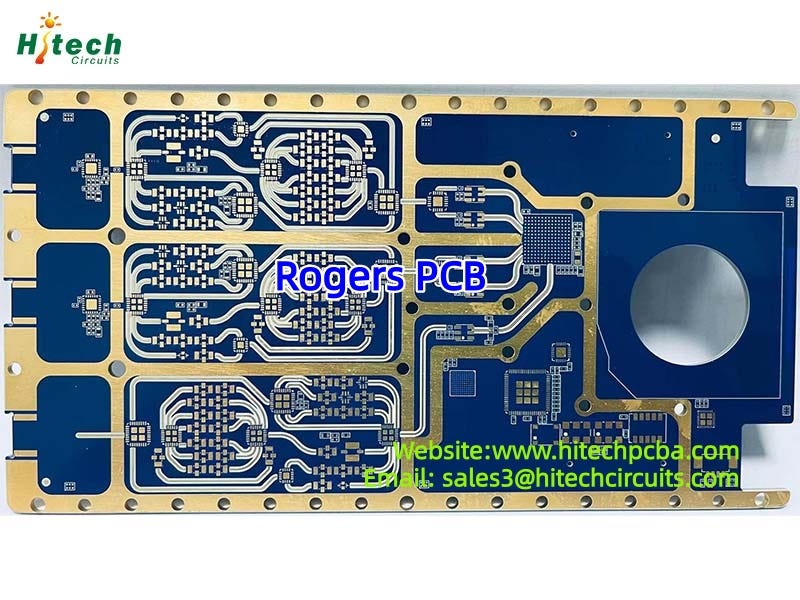
Printed circuit boards are commonly manufactured using FR4, which has become the industry’s standard material due to its low cost, easy availability, and decent performance for general electronic applications. FR4 works well when the circuit operates at low to moderate frequencies. However, as signal frequency increases, FR4 begins to show limitations in terms of dielectric loss and signal integrity. For such high-frequency scenarios, manufacturers turn to advanced substrates such as Rogers PCB, which are specially engineered to deliver consistent performance at RF and microwave levels.
FR4 stands for Flame Retardant Level 4, a composite material consisting of woven glass fabric and epoxy resin, typically clad with copper foil on one or both sides. In contrast, Rogers PCBs are based on ceramic-filled hydrocarbon or PTFE composites, which provide much better dielectric stability. Some Rogers materials also include woven glass reinforcement, which further improves electrical characteristics and makes them comparable to PTFE-based substrates.
Key Comparisons Between FR4 and Rogers Materials
Material Composition and Hardness
FR4 is an epoxy-glass laminate, which makes it moderately rigid and mechanically stable. Rogers materials, on the other hand, often use hydrocarbon/ceramic blends, resulting in a softer structure optimized for high-frequency designs. In hybrid multilayer designs, it is common to combine both FR4 and Rogers to balance performance and cost.
Processing Requirements
Unlike PTFE-based laminates that require special drilling and plating methods, many Rogers series such as RO4000 can be processed similarly to FR4 without additional manufacturing steps. FR4 laminates, however, are primarily valued for their smooth surface, good flatness, and reliable insulation. They are widely used not only in PCBs but also in stiffeners, transformer insulation, and backing plates in the drilling process.
Cost and Application Range
Price is one of the most significant differentiators. FR4 is inexpensive and suitable for consumer and industrial electronics that operate at lower frequencies. Rogers materials, while more costly, are the preferred choice for high-speed digital, RF, microwave, and aerospace electronics, where performance is critical and budget can accommodate the premium.
Impedance Control
Stable impedance requires a material with a well-defined dielectric constant (Dk). FR4 has a Dk around 4.2–4.5, which is often insufficient for advanced RF applications. Rogers PCBs, with Dk values ranging from about 6.5 to over 11, provide far better impedance stability, especially in high-frequency and high-power environments.
Thermal Performance
For designs where circuits run at high speed and power, thermal reliability becomes essential. FR4 materials have limitations in heat dissipation, leading to reliability issues under stress. Rogers substrates demonstrate superior thermal conductivity and can withstand high operating temperatures, making them suitable for 5G, automotive radar, and satellite systems.
Signal Loss (Dissipation Factor)
FR4 laminates typically show a dissipation factor (Df) of around 0.02. In comparison, Rogers PCBs offer much lower values, typically near 0.004. This drastic reduction means significantly lower signal attenuation, which is critical in maintaining high-frequency performance.
Moisture Absorption
Moisture uptake directly affects dielectric stability. FR4 absorbs more water compared to Rogers, which has very low moisture absorption, ensuring better reliability in humid or harsh environments.
Application Scenarios
FR4 is sufficient for most general-purpose, low-frequency, and cost-driven products. Rogers is the preferred choice for RF/microwave systems, aerospace electronics, advanced communication modules, and high-reliability sectors.
Conclusion
While FR4 remains the go-to material for cost-effective PCB manufacturing in standard electronic products, its performance decreases sharply at higher frequencies. Rogers PCBs, though more expensive, deliver unmatched electrical stability, thermal endurance, and low signal loss, making them the material of choice for applications such as 5G infrastructure, aerospace, radar, and microwave communication. For engineers targeting high-frequency designs with tight performance requirements, Rogers substrates are worth the investment. Need a fast quote, clik here get the contact information.